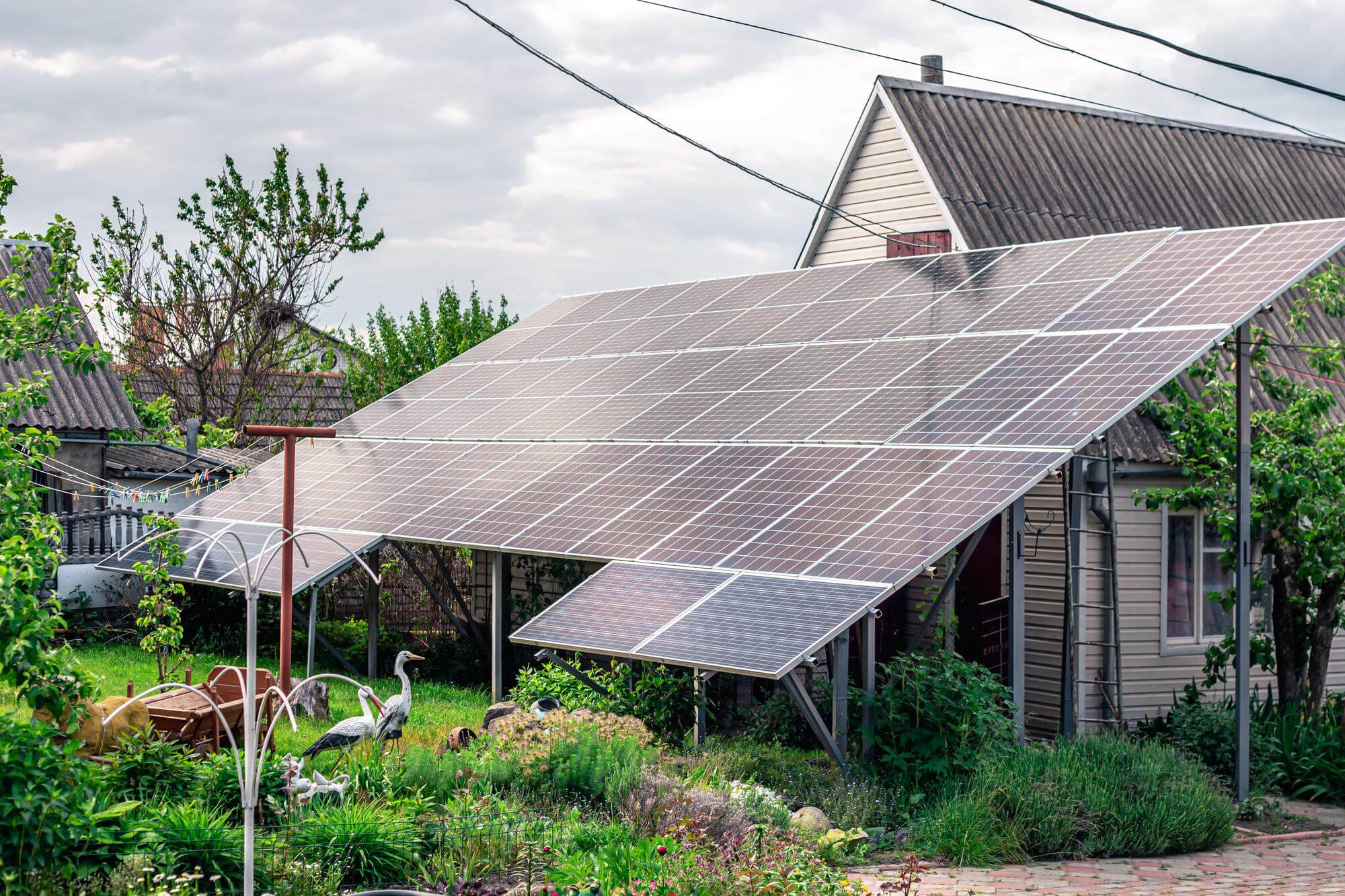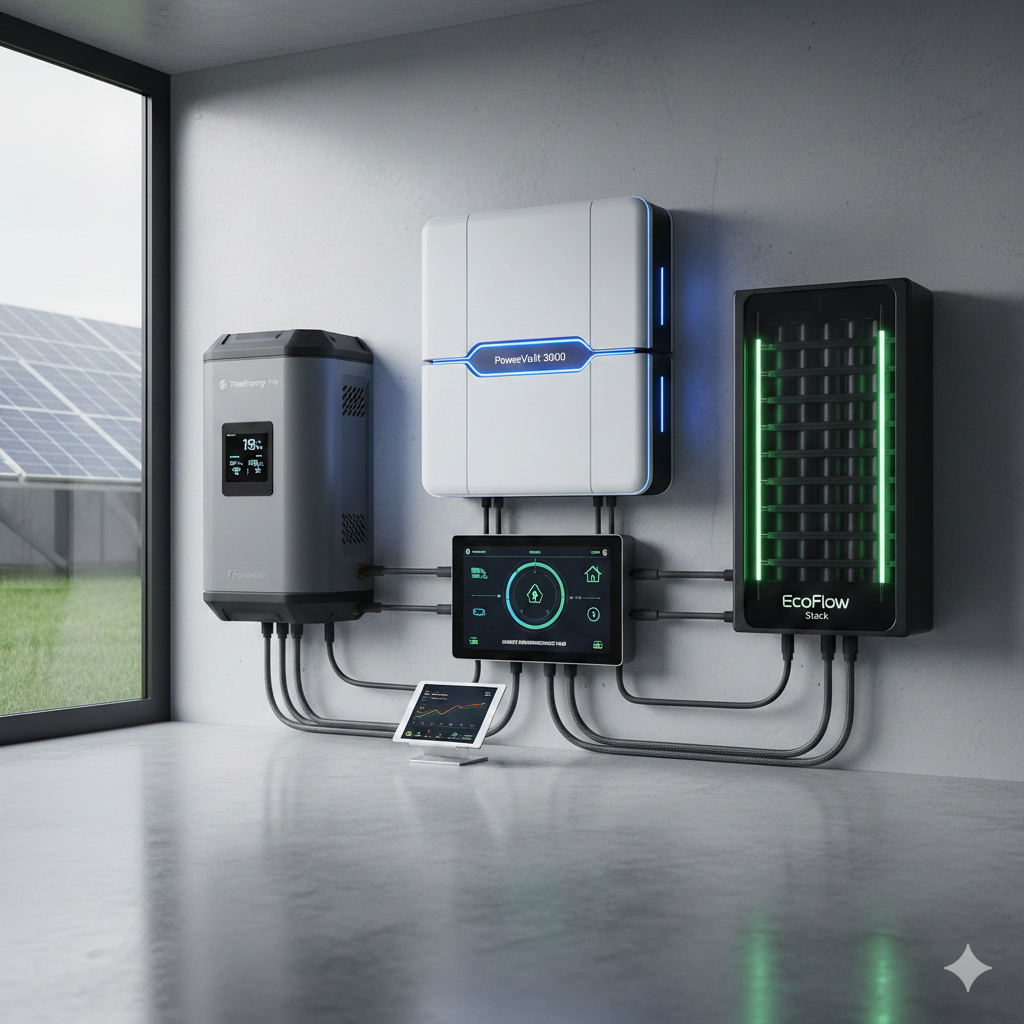
The best battery storage systems for blackouts and energy independence combine high surge power, long runtime, automatic islanding, and proven Australian performance during real outages.
Systems like Tesla Powerwall, BYD modular batteries, and AlphaESS consistently perform when the grid fails. However, true blackout success depends just as much on correct system design, backup circuit planning, and realistic load expectations as it does on the battery itself.
This guide ranks the top-performing battery systems for Melbourne and Victorian conditions in 2025, based on real-world testing, exact specifications, and current rebate economics.
What Defines Strong Blackout Performance?
Battery performance during outages is not just about capacity. The following specifications are critical.
Must-Have Features
Continuous power of 5 kW or more
Surge power of 10 kW or more
Automatic islanding with switchover under 20 milliseconds
Ability to charge from solar during a blackout
Minimum 8 hours runtime on essential loads
IP65 or higher weather rating for storm resilience
Backup Load Categories (Realistic Planning)
Critical Loads
Fridge and freezer
Medical equipment
Startup power: 800–1500 W
Running power: 150–400 W
Runtime target: 24–72 hours
High Priority Loads
Lights
Wi-Fi and modem
Phones and devices
Running power: ~100 W
Runtime target: 24+ hours
Medium Priority Loads
Washing machine
Microwave
Running power: ~800 W
Runtime target: 2–4 hours
Low Priority Loads
Air conditioning
Hot water
Oven
Running power: 1500 W+
Runtime target: 1–2 hours
Realistic essential load target:
500–800 W continuous
Top Battery Systems for Blackouts (2025 Rankings)
1. Tesla Powerwall 3 – Best Overall Backup Performance
Why it leads during outages
11.5 kW continuous power
Up to 30 kW surge capability
Sub-10 ms automatic islanding
Storm Watch pre-charging before outages
Liquid cooling for heatwave reliability
Capable of whole-home backup (within limits)
Real-world performance
Essential loads (~600 W): 20+ hours runtime
Handles large appliance startups without tripping
Excellent reliability during Melbourne storm events
Limitations
Premium pricing
Fixed 13.5 kWh capacity (non-modular)
2. BYD Battery-Box Premium (HVS / HVM) + Hybrid Inverter
Best choice for multi-day independence
Modular expansion up to 60 kWh+
Works with Fronius or Sungrow hybrid inverters
DC-coupled solar continues during blackouts
Lithium iron phosphate (LFP) safety
3-phase capable for large homes
Tested results
20 kWh system: 3–5 days of essential loads
Solar recharge can extend outages indefinitely
Ideal for EV-ready and rural homes
Strength
Ultimate flexibility and long-term scalability
3. AlphaESS Smile Series – Best Value Backup Option
Why it’s popular
7.5 kW continuous power per stack
15 kW surge capability
Stackable to 26 kWh+
Automatic EPS backup mode
Competitive pricing after rebates
Field performance
13 kWh system: 18–24 hours essentials
Strong entry-level blackout protection
Clear upgrade path later
Backup Design Matters More Than Battery Size
Over 90% of blackout failures come from poor backup circuit design, not battery faults.
Recommended Backup Circuits
Fridge and freezer (dedicated circuit)
Lights and power points (living areas and bedrooms)
Wi-Fi, modem, and communications
Medical equipment (if required)
Water pump (for tank or rural homes)
Target design load
800 W continuous
3 kW surge capacity
Whole-Home Backup: Reality Check
Typical Melbourne home peak load: 10–15 kW
Most batteries supply 7–11 kW continuous
Reality
Expect 60–70% of the home backed up
Or fully protected essential circuits only
Avoid installers promising “full house backup” without load management.
Runtime Examples (13.5 kWh Battery)
Minimal loads (300 W): ~45 hours
Essential loads (600 W): ~22 hours
Comfort loads (1200 W): ~11 hours
Heavy usage (2500 W): ~5 hours
Melbourne outages average 2–8 hours
A single 13 kWh battery covers most events.
Solar Charging During Blackouts
This feature separates good systems from great ones.
AC-coupled batteries: drain without grid support
DC-coupled batteries: recharge from solar daily
Even on cloudy Melbourne days, solar can add 8–12 kWh, dramatically extending runtime.
Winner:
BYD paired with hybrid inverters
Energy Independence Explained
True independence means surviving multiple days without the grid.
Daily Usage Targets
Basic independence: 5–8 kWh/day
Comfortable independence: 12–18 kWh/day
Full independence: 25–40 kWh/day
Winter Reality Test (Melbourne)
Three cloudy days typically require 27 kWh+ storage to remain independent.
Best Systems for Energy Independence
Ultimate Independence Setup
BYD HVM 29.5 kWh + Fronius 10 kW
3–7 days essential loads
Daily solar recharge
3-phase support
EV charging capable
Post-rebate cost around $18,000
Premium User Experience
Two Tesla Powerwall 3 units
Excellent app control
Storm Watch across both units
Strong VPP earnings
Best usability overall
VPP Participation (Bonus Income)
Virtual Power Plants can offset independence costs.
Tesla Energy Plan: ~$250/year + per-kWh rewards
AGL VPP: $400–600/year
Origin Loop: $300–500/year
Smart strategy:
Larger batteries = higher VPP returns = faster payback.
Installation Requirements for Reliable Backup
Mandatory Components
Automatic transfer switch or battery gateway
Dedicated backup sub-board
Surge protection (Type 1+2)
CT clamps for load detection
Critical Design Steps
Measure startup and running watts of every essential appliance
Map circuits by priority
Size inverter for continuous + surge loads
Prefer DC-coupled solar for blackout recharge
Perform real outage simulation on day one
Common Installer Mistakes to Avoid
Undersized backup circuits
No surge protection
Incorrect CT clamp placement
Single-phase limitation on three-phase homes
No load shedding logic
Always request written backup design and test results before final payment.
Final Recommendations
Best for Blackout Protection
Tesla Powerwall 3
Reliable
Fast switching
Strong surge handling
Best for Energy Independence
BYD HVS / HVM + Hybrid Inverter
Solar during outages
Modular expansion
Long-term flexibility
Best for Budget Backup
AlphaESS Smile Series
Strong value
Solid blackout coverage
Upgrade-ready
Golden rule:
Backup circuit design matters more than battery size.
Design first. Choose hardware second.