Commercial kitchens are the heart of Australia’s hospitality industry, but their high heat loads, grease buildup, and constant airflow demands make HVAC systems critical—and costly. At Zero Energy, we specialise in energy-efficient commercial HVAC and kitchen ventilation solutions designed to reduce energy bills, improve air quality, and align with Australia’s sustainability goals. Let’s explore how upgrading your system can transform your kitchen’s performance.
Why Commercial Kitchens Need Specialised HVAC Systems
Commercial kitchens face unique challenges that standard HVAC systems can’t manage:
- Extreme Heat Loads: Ovens, fryers, and grills generate intense heat, requiring robust cooling.
- Grease and Odour Management: Effective ventilation must filter grease and smoke to meet health standards.
- High Energy Consumption: Traditional systems often waste energy, inflating operational costs.
- Air Quality Compliance: Poor ventilation risks fines and reputational damage under Australian regulations.
Without tailored solutions, kitchens risk safety hazards, inefficient workflows, and soaring bills.
Energy-Efficient HVAC Solutions for Australian Commercial Kitchens
1. Smart HVAC Systems with Zoned Climate Control
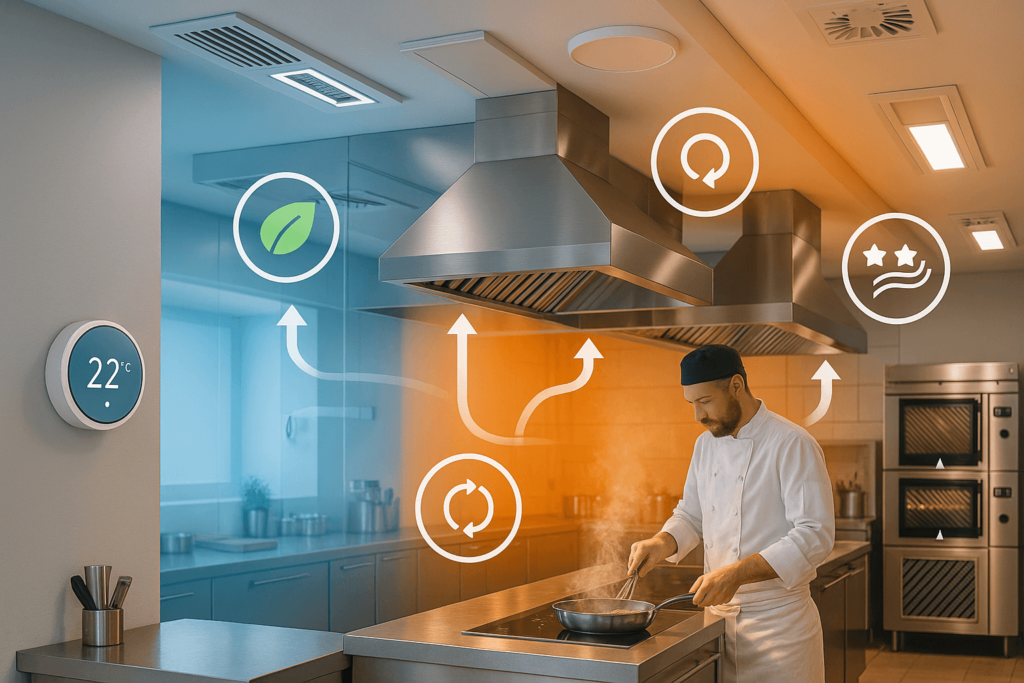
Modern commercial HVAC systems use IoT sensors and automation to adjust temperatures in real time. Zero Energy’s zoned designs:
- Cool high-heat areas (e.g., cooking stations) without overcooling storage or dining spaces.
- Reduce energy waste by up to 30% through optimised airflow and load balancing.
- Integrate with existing equipment for seamless upgrades.
2. Advanced Kitchen Ventilation Design
Proper kitchen ventilation isn’t just about exhaust hoods—it’s about precision. Our systems include:
- High-Volume Low-Speed (HVLS) Fans: Improve air circulation while using 60% less energy.
- Grease-Resistant Filters: Capture 95% of airborne particles, simplifying compliance.
- Demand-Controlled Ventilation (DCV): Adjust exhaust rates based on kitchen activity.
3. Heat Recovery Systems
Reclaim wasted heat from ovens and exhausts to preheat water or warm dining areas. Zero Energy’s heat recovery tech can:
- Cut water heating costs by 40–50%.
- Lower carbon emissions by repurposing thermal energy.
Benefits of Upgrading Your Kitchen’s HVAC System
Investing in modern HVAC and ventilation delivers immediate and long-term advantages:
✅ Lower Energy Bills: Efficient systems reduce power consumption by up to 45%.
✅ Improved Safety: Mitigate fire risks from grease buildup and overheating.
✅ Enhanced Comfort: Stable temperatures boost staff productivity and customer satisfaction.
✅ Sustainability Credentials: Align with Australia’s Net Zero targets and attract eco-conscious clients.
Why Choose Zero Energy for Your Commercial Kitchen HVAC Needs?
At Zero Energy, we combine Australian industry expertise with cutting-edge technology to deliver:
- Custom Audits: We analyse your kitchen’s heat load, airflow, and energy use to design bespoke solutions.
- Government Rebates: Access available grants for energy-efficient upgrades.
- Ongoing Support: From installation to maintenance, we ensure peak performance.